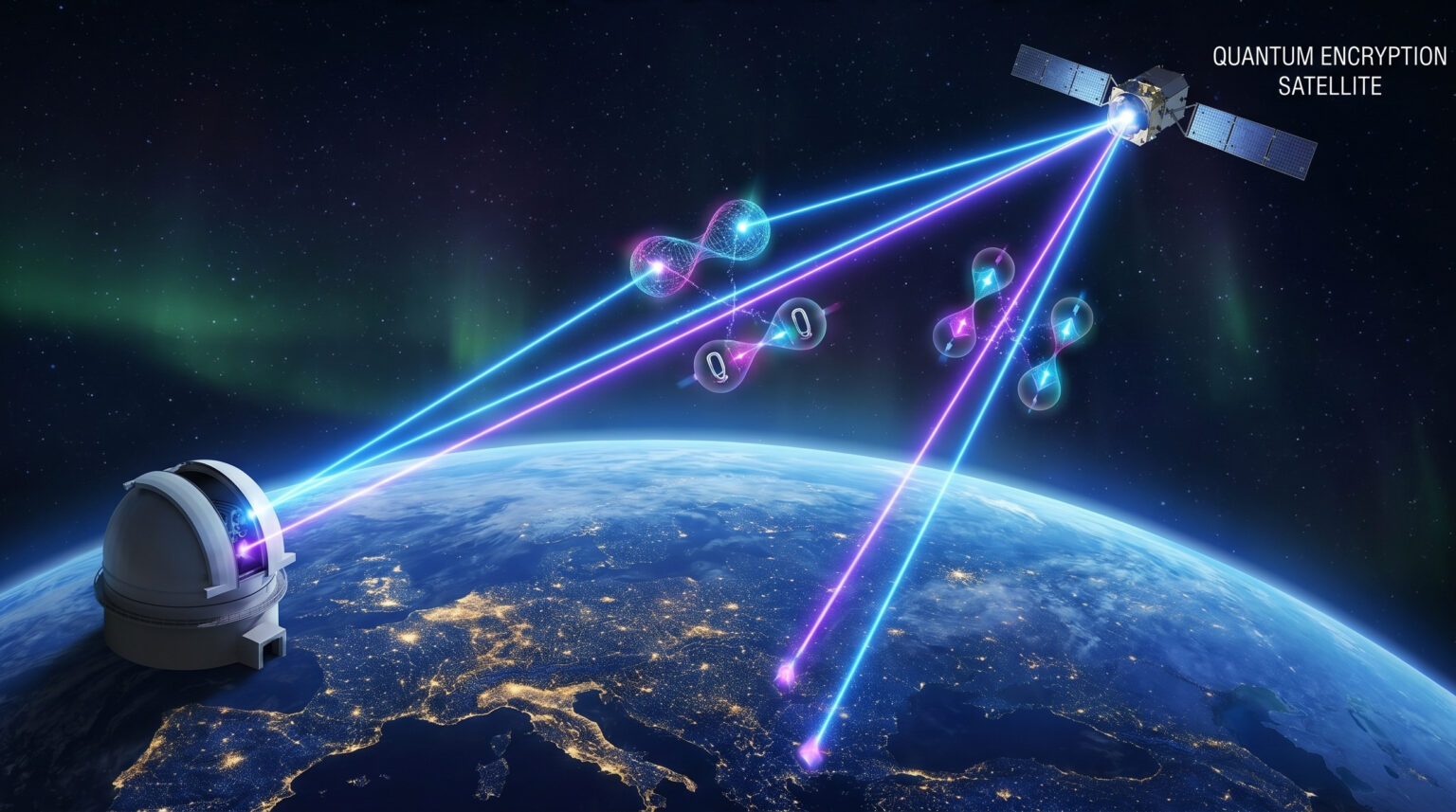


Europe is undergoing a strategic transformation in secure communications through the development of the European Quantum Communication Infrastructure (EuroQCI), a joint initiative of the European Commission and the European Space Agency (ESA).
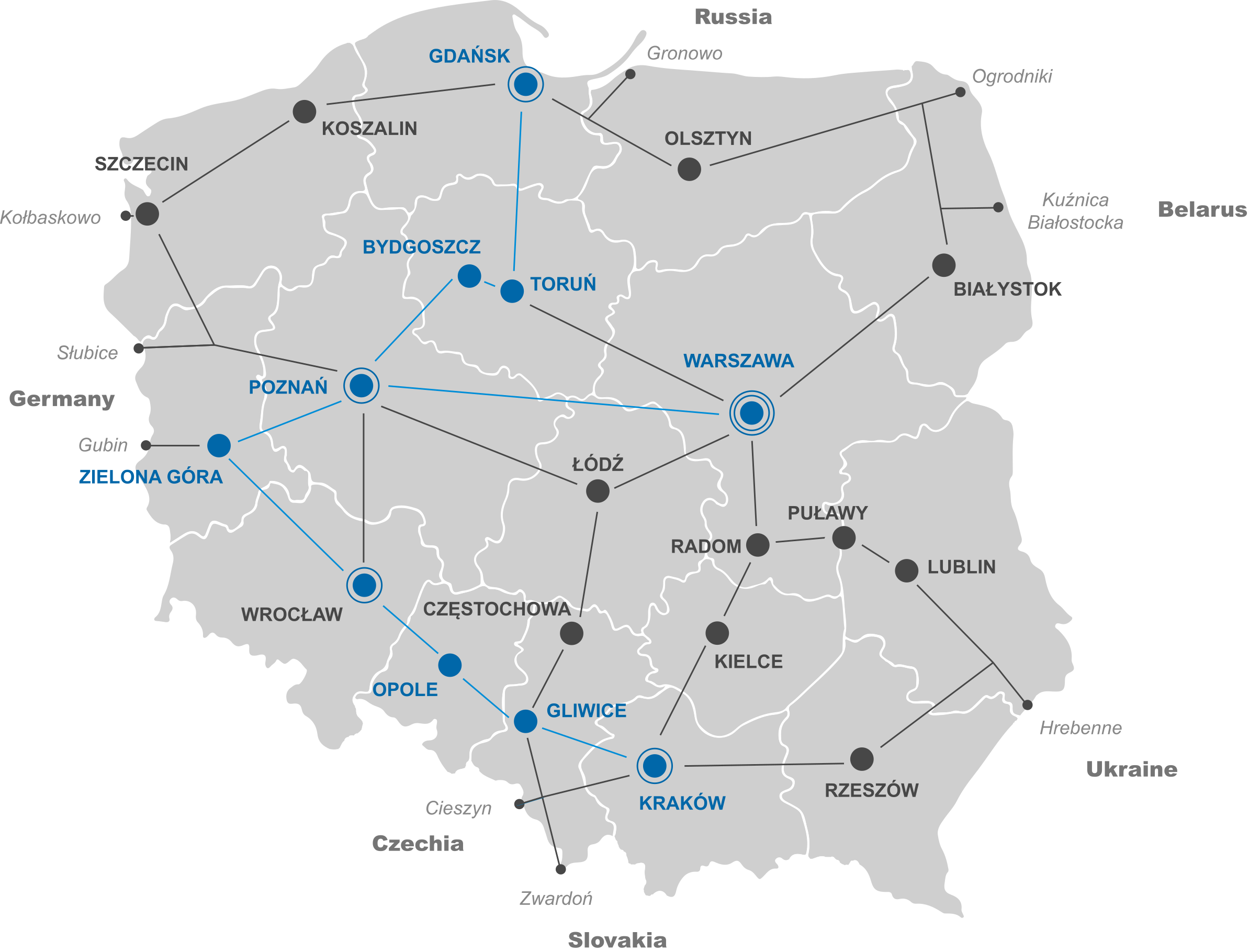
Poland is currently at the forefront of this effort, having established the largest terrestrial quantum key distribution (QKD) network in Europe—PIONIER-Q, comprising 1,770 km of dedicated optical fiber and interconnecting major cities.
Lithuania is also emerging as a key regional partner, having successfully tested quantum communication systems between its leading academic institutions and initiated the development of its national quantum gateway, LTQGate, designed to interface with Poland’s PIONIER-Q backbone. These initiatives demonstrate both countries’ commitment to EuroQCI and their strategic role in building a quantum-secure Baltic corridor.
Existing Pionier-Q network
About project
The project aims to establish a cross-border quantum communication link between Poland’s national QCI infrastructure – PIONIER-Q network – and other terrestrial and satellite QCI networks in Europe, with a particular emphasis on Lithuania. The goal of the project is the deployment of a transportable Optical Ground Station (OGS) to enable satellite-based QKD, as well as the development of interoperable components to support future EuroQCI satellite missions, including those under ESA’s SAGA programme.
Lithuania’s involvement includes the development of compatible infrastructure and protocols to ensure seamless integration with Poland’s QCI backbone, forming a robust and faultresilient quantum link across the Baltic region.
The project will significantly enhance the security of strategic communications across borders, supporting the protection of critical infrastructure and public institutions. It reinforces the roles of Poland and Lithuania as regional leaders in quantum technologies, while contributing to national and European objectives in innovation, digital transformation, and technological independence. By investing in quantum infrastructure, the project also creates new opportunities for scientific research, education, and high-tech industry development, ultimately benefiting citizens through improved trust, resilience, and sovereignty in digital services.
Project consortium



Contact

Project coordinator:
Michael Marks
Director of Cloud Computing and Smart Networks Division
NASK PIB
Project funding
This project has received funding from the European Union‘s Connecting Europe Facility (CEF) – Multiannual Work Programme 2024-2027 under grant agreement No 101249721.
The work described in this document has been conducted within the PIONIER-Q-SAT project. This document reflects only the PIONIER-Q-SAT Consortium view and the European Union or the European Health and Digital Executive Agency (HADEA is not responsible for any use that may be made of the information it contains.